

In my last post about editing, I discussed various techniques that can help you cut down on word count. This is extremely important in refining ideas you already have.
But what can you do to help boost your word counts? There are so many websites with vague tips about a change of setting and commitment. While these things are important, there are things you can do in your everyday life that can subtly help you reach your goals. Today, I want to discuss a writers secret weapon.
Immerse yourself in writing.
It sounds silly, but much like learning a new language, immersing yourself in a culture can re-shape your understanding. I’m going to list some things that have helped me engage with the writing culture.
- Reading Everything
- Journalling
- Free Writing
- Character Sketches
- Genre Flipping

Reading Everything
When I say everything, I mean everything. Instead of sticking to your usual preferred genre, try reading something you’d never consider. Enjoy romance? Try horror. Enjoy thrillers? Try sci-if. By breaking out of the tropes of your genre, you give yourself the space to think outside the box.
One thing I’ve learned in school is that genres overlap. Every good story has immersions of different genres. Even non-fiction writing can be good to read up on. Fiction is inspired by daily life. Both the stories on my blog, The Bone Lady of Eastern Main Road and Vacation, are creative non-fiction. For those of you who may be unfamiliar with this genre, it is non-fiction events with creative elements. That’s basically a fancy way of saying, not all the details are accurate and we take creative license to create atmosphere. Reading other people’s work and other genres benefit your ability to reshape the way you write.
It’s the oldest trick in the book. Monkey see, monkey do. Not that any of us are monkeys, but as humans we learn from seeing others do. So wouldn’t it make sense that we could simply learn techniques from the most successful authors out there?
The only trick to this is learning to analyze how the author is doing well. How is the author creating a sense of mood? How do they create feeling at the sentence level? These are large and complex questions that have more than one answer. But if you read from the perspective of a writer and you write from the perspective of the reader, you will achieve the balance necessary for good writing.

Journalling
Journalling is not only good for your mental health, but it’s also good for your writing. Allowing yourself to freely express yourself will open you to being vulnerable in your writing.
If you’re feeling stuck in your life your writing will stop.
Writers block is something we all experience. Sometimes, I sit and stare at a blank screen for 10 minutes before I realize, I’ve written nothing. Instead of escaping into the fantasy worlds we’re building, we need to focus on our real life. Real life affects your ability to communicate.
Readers want honesty.
A journal is a private space for you to be honest. If you can be honest with yourself about how you’re feeling, you can be honest with your audience when you’re building worlds.
Let the walls down and be free. Write when you’re sad, happy, angry, jealous, excited, and hopeful. When you record the way your diction changes with your moods it will help you create more realistic character narratives. When people feel a certain way, their communication changes. Tracking your own moods can help you have a reference point for the way a person naturally responds to situations.
Journalling will not only free your mind, it will free your writers block.

Free Writing
Free writing is similar to journalling. You can write about anything, in any world. It can be a messy flow-of-consciousness or a well rounded essay. The way I use free writing is a little different than most writers.
I separate this space for me to brainstorm my stories. Instead of writing in proper narrative form, I write without care for the rules of grammar and spelling. I write and write about the plot holes and the awkward interactions. I allow myself to spiral into the world of my imagination.
Don’t judge your creativity.
Free writing improved my stories by catching unique ideas in a sea of crap. Think of it as a writing journal. A diary full of disgusting clichés and cheesy one-liners. Let it all out. It will help you to focus your ideas and have a starting place.

Character Sketches
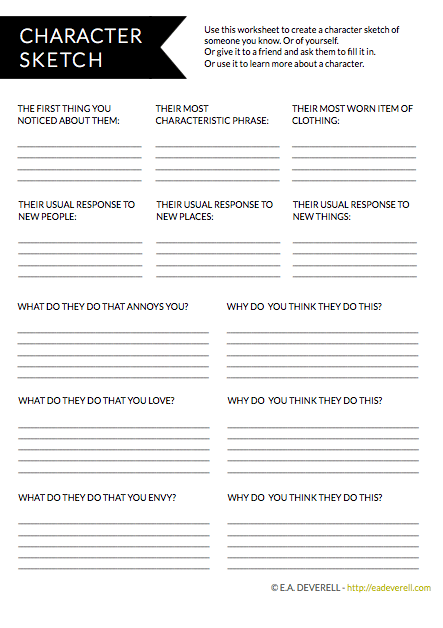
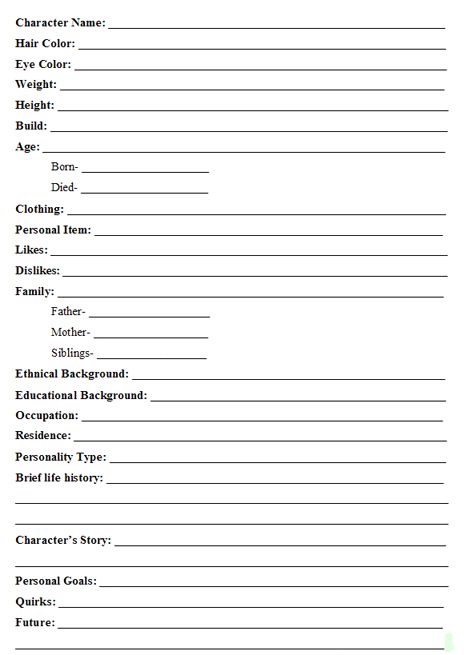
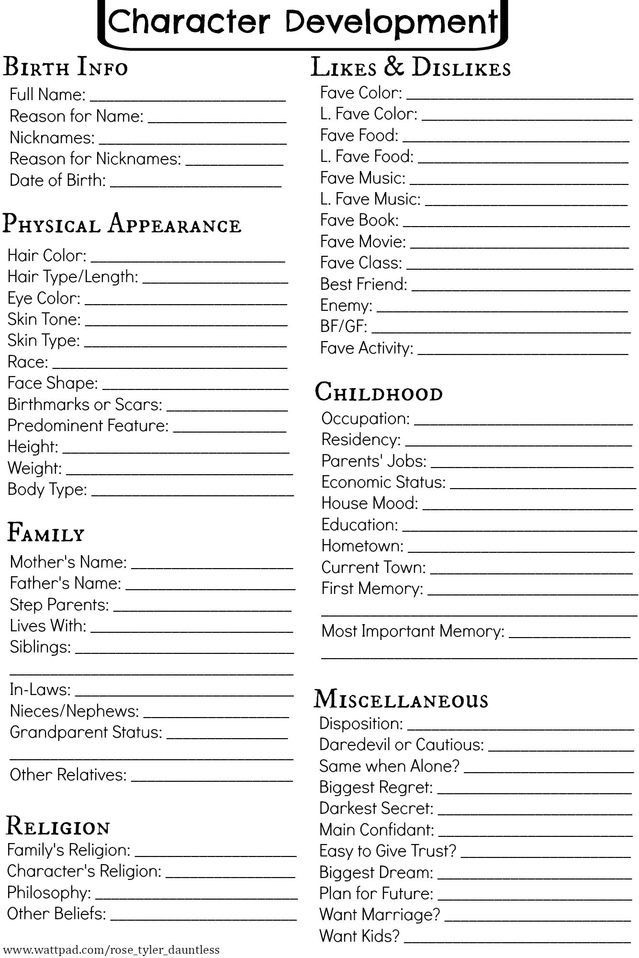
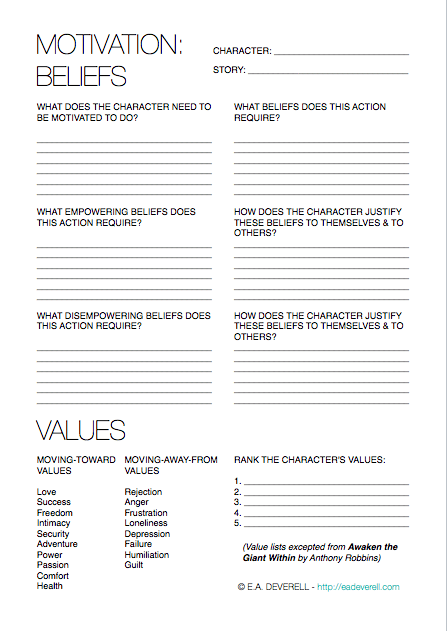
Character sketch is a new technique I picked up. It’s when you create a profile for your characters. It sounds simple, I know. But think about it. Do your characters have dimension or are they only there to serve the plot? You may not use your character sketches in your writing, but it will help you navigate the plot in an organic way. Let the characters speak for themselves.
Creating these character profiles also helps you to keep track of all your characters. I keep a bundle of these forms filled out for each big project I’m working on. It helps me to understand how the characters would interact with the world and with each other.
I’m going to put some of my favourite templates below for you to check out. I do not claim any of these forms as my own work. They are simply the tools I use to keep track of my characters.


Genre Flipping
This is a similar concept to the reading section above, but slightly different. While exploring different genres outside of your comfort zone, try playing with the tropes of those genres in your own work.
I originally started writing romance fiction in my spare time. One of my professors recommended reading outside my preferred genres and said something that changed my life.
“It’s okay to try writing in these genres too. No one has to see it. Just try it for fun.”
This simple statement changed me. I tried an exercise; every time I would read a book, I’d try to write from that genre. It turned out that I actually love writing suspense and horror. For those of you who know me, I don’t seem like a grim reaper writer. But I can’t deny the thrill of writing creepy, suspenseful adventures.
Writing outside of your genre can do wonders for helping you to refine plot issues you may be facing. Sometimes we get stuck in our heads. Those generic tips that tell you to change setting are right. Let your characters change setting. Throw that wimpy kid into a lions den and see how he fares. Take your badass heroine and throw romance at her.
No one has to see it. Just like your journal and free writing, it’s for you. Flipping the genre can help you gain traction. Maybe the reason your story is falling flat is because its missing a piece that only another genre can offer. Keep writing. As readers, we want to hear your voice. Be honest with us. Be vulnerable with us.


 Poetry, Prose, & Peonies
Leave a reply to Inspiring Ideas: The Character Driven Story – Poetry, Prose, and Peonies Cancel reply