
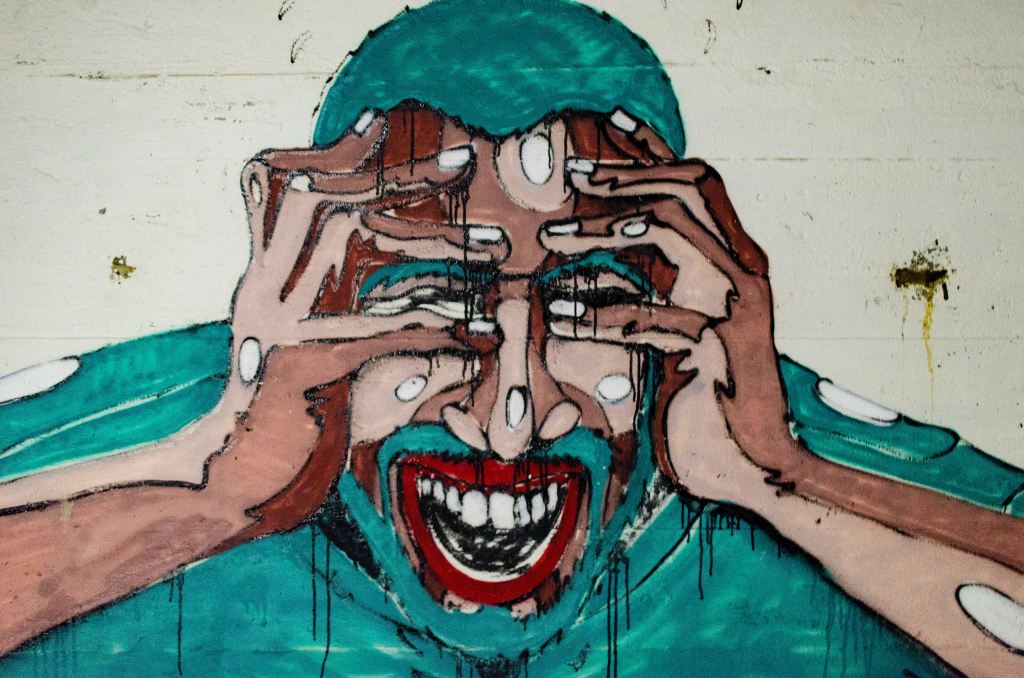
We all deal with it. No matter who you are, or how immune you feel sometimes, one day writer’s block hits you. Sometimes injury and illness is the cause.
Over the last year, I have been unable to post due to unforeseen health issues. I learned the answer to the question; what happens to your writing practice when your body is not at full function?
Last year, I was in a minor car accident. I had the basics, concussion and whiplash. I was already healing from a previous ice-involved ankle injury, and was set to bedrest in my last year of university.
It was heartbreaking. The pandemic had finally receded enough for in-person classes, but I could not participate. I couldn’t write for my blog, or really for myself, because I needed all my energy to be focused on getting through the end of undergrad with a concussion.
There were days it felt impossible. Reading hurt. Screens hurt. Even moving my head hurt. I was frustrated and emotional. I just wanted to be better. I wanted to get through this so I could get back to writing and get back to my life.
What I didn’t expect was the depression that came after the injury. It lasted longer than the wounds did. I graduated and tried to get back into the swing of writing. But I couldn’t.
My thoughts seemed to become muddled after the accident. I couldn’t think clearly, nor could I get out of bed long enough to hold a pen. The worst part of it was acknowledging that I had spiralled into a hermit mode.
The pandemic conditions lasted past 2022 for me. I couldn’t go out for nine months, and then I immediately graduated and stopped having a reason to go out and see people. Working remotely with access to delivery for everything was great for a while, but then it became like a poison.
I wasn’t seeing friends, I wasn’t going out, and I barely left my house. I didn’t know what to do, what to think. I spent months on end, depressed.
I have begun to write again, and it’s because for the first time since the accident, I feel hope. I’ve written before about the importance of a healthy mind when it comes to writing, but I didn’t realize the same mentality applies to our bodies as well.
If you are unable to write, for whatever reason, it’s okay not to write. It’s very easy to get frustrated with yourself, and follow the self-sabotage down a path of “you’re lazy,” or “you’re just not good enough.” But those are lies. Your body is hurting and needs a minute.
The truth is, there is no one-trick to getting back into the swing of it. I started with journalling. I remembered what I was writing for, which is me. I write because it feels good, and I have things to say. But if I have nothing to say, then why force myself to write?
Developing a writing practice is the cornerstone of becoming a successful writer. Despite knowing that, my practice has never been solid, it’s always been sporadicly based in deadlines and inspiration – which unfortunately is not sustainable.
I decided that before I could get back to writing my novel project, I first needed to check in with myself. It was deeper than a mental check, it was harder than simply changing environment. My body was the environment that was damaged, inescapably so.
So, I stopped writing.
Not a blog post, not a journal entry, not a single word written to paper or screen. It was frustrating as hell. I thought that taking the break would be stupid, a waste of time, but I found a very different result.
Once I gave myself time away from writing, from school, from engaging with my novel or my blog, I realized that my body was exhausted. The accident led to discovering other, more chronic health issues (that I will not delve into) that made me realize how hard I’ve really been on myself.
Who am I writing for? Why am I writing it?
If I don’t give my body time to heal, I can’t ask it to produce anything. I was asking myself to push past the blaring headaches caused by screens, to push past the shooting pains in my neck and shoulders, I asked myself to push past every capacity I’d ever had.
For what?
I created an internal image of myself, a value and a metric I invented, to force myself to constantly strive for more. But that image became destructive the moment I couldn’t keep up anymore. Perhaps it was time for that to change.
I started writing in my journal again. One page – literal plain details, mechanical details about my day. “I opened the fridge and I didn’t want any food. Writing this is stupid. I just want to write something down.”
The act of “mechanicalizing,” if you will, forced me to sit with myself. I had to acknowledge how I was physically feeling and what I was physically doing. One page turned to three. “I’m finding myself lost in my thoughts, absolutely encased by them. I don’t know how to get up from here.”
But I got up and wrote seven more pages. “I think the plot is too complicated. I think I need to slow it down, pace it out, let it breathe more.”
Unprompted.
I allowed my thoughts to flow onto my journal pages and found dozens of contradictions hiding in my story, not because I had to, but because I was thinking about it and decided to mechanically write it down. Once in the simplest terms, I realized that I added things that didn’t belong, and was missing things I certainly needed.
But I still couldn’t write. It was like all the words in the world evaded me.
So, when you can’t write, research. Editing is for when you have work done. If your work isn’t done because you can’t bring yourself to write, you’re uninspired, you physically can’t write or go anywhere, then you need to bring the world to you.
I researched everything I could find. I discovered that the Euphrates River is drying up, causing panic of biblical and political proportions. I learned that there is a species of frog called the Poison Dart that can kill you by sitting on your skin. Oh, then there’s the intense readings I did on the violence within Roman culture – that was before everyone discovered that their boyfriends and husbands were thinking about the Empire about as much as I was.
Are any of these facts beneficial to my story? No. Are any of these facts beneficial to my life? Yes, because now I know not to touch the pretty frog, I learned the gold-filled caves are a sign of impending apocalypse, and I gained a pretty deep and unnecessary understanding of why crucifixion is the worst way to die.
Who cares if it’s relevant? Just read.
Reading has always been a writer’s best friend. So, I read some fiction books too. The Seven Husbands of Evelyn Hugo by Taylor Jenkins Reid was the first book I gobbled up and it left me wanting more. I read Verity, my first Colleen Hoover read, and my god, it was insane. I then read The Duke and I by Julia Quinn. Since then, I’ve been author-hopping in an attempt to find something that I click with.
None of these books caused a revelation. None of these books did anything besides entertain me. But isn’t that the point?
I was so caught up on being a good writer, a successful writer, that I forgot the heart of what I’m supposed to be doing. Writing for enjoyment.
The same way no one needed to know about the frogs in the Amazon (except, of course the people who live there), is the same way that no one needs to know what you’re writing. Nerd out. Read about frogs cause they’re weird, and you’ll meet one of the more than 5000 species of them.
Who cares?
Throw away the expectations that you have for yourself when you’re in the swing of life. Your body is asking you to heal, it’s asking you to focus on getting through to the next step. Sometimes that random fact becomes a plot twist in later years, and sometimes it’s just a thing you know now, but it took your mind away.
I still couldn’t write, even after researching, so I started talking to myself in voice memos.
I highly recommend using voice memos and videos to your advantage, rant about any and everything. Verbalizing is a valid and acceptable, and very under-valued, tool. Recording your thoughts, conversations about your project and writing in general, it can act as a journal of sorts.
In time, your body will heal and you will catch yourself, or for our chronic condition peeps, you learn to cope. Once you create these recordings, what I call “depressy diaries,” it gets easier to stop talking and start writing.
But the biggest step is just taking the plunge and writing something. It can be garbage, and no one has to see it. But as your body heals, so does your mind, and so does your craft. Something like a car accident can knock you off your game for over a year. But armed with information, and armed with ways in which you can write without writing, you’re now prepared to start writing again.
When you can’t write, it’s probably because something else needs your attention more. Deal with your distractions, give your mind some space, and then sit and write mechanically until something picks up.
Just keep writing. Your body is trying to heal, so let it.
Of one thing I am certain, the body is not the measure of healing, peace is the measure.
Phyllis McGinley
Header Photo by Aarón Blanco Tejedor via Unsplash


 Poetry, Prose, & Peonies
Leave a reply to Let Her Sail Away: Trauma and Writer’s Block – Poetry, Prose, & Peonies Cancel reply